
Palm Springs Previous Resident Sources
A reliable address history uses sources that describe different people and dates. The Property Appraiser identifies the current parcel and owner. Recorded deeds follow title holders. Directories and census schedules can add occupants, while newspapers and probate may explain a death, move, or transfer. No single source is a complete roll of previous residents.
Palm Springs was chartered in 1957, and its first homes opened in 1958. The table therefore begins with the records that can document development and early conveyances, then adds the household sources whose exact local coverage must be confirmed.
| Evidence source | Verified period | Custodian or access point | What the source contributes |
|---|---|---|---|
| Landmark Official Records | Images from Jan. 1, 1968; older index, books, and plats | Clerk online, mail, or Main Courthouse | Owners, instrument dates, legal description, book/page |
| Village-era deeds and plats | 1957 and 1958 forward, parcel dependent | Clerk books and microfilm | Developer conveyance and early chain |
| Printed or criss-cross directories | Exact Palm Springs years not published | PBC Library GRS request | Listed occupant or subscriber by address |
| Palm Beach Post | 1916 to today | PBC Library database | Sales, obituaries, notices, and named residents |
| Federal census | Through 1950 currently public | NARA or library Ancestry | Households before village creation |
| PAPA | Current roll plus displayed sales history | Property Appraiser Public Access | Owner, situs, mailing, homestead clue, parcel facts |
| Permits and code files | Start date not verified | Village or county by place and date | Work dates, applicants, and notice names |
Start with PAPA for any modern address. Use the deed chain for ownership, then add dated household evidence. For an early village home, expect the online image trail to hand off to courthouse material.
Trace Palm Springs Past Owners
The backward chain begins at Palm Beach County Property Appraiser Public Access, because PAPA accepts an address and gives the parcel control number, current owner, municipality, legal description, and last sale book and page. Those fields provide a controlled handoff to the Clerk. A name by itself is not enough, especially when several people share it.
- Search the full address in PAPA. Copy the PCN, owner, municipality, legal description, last sale date, and deed book and page.
- Open that book and page in Landmark Official Records. Record the grantee, grantor, execution and recording dates, instrument number, and exact property description.
- Search the grantor as an earlier grantee. Limit the dates to before the current deed, then confirm the same legal description or PCN.
- Repeat one transfer at a time. Keep liens, releases, mortgages, and deeds distinct because they do not all transfer ownership.
- When the image trail reaches its cutoff, move to the Clerk's microfilm, older books, abstract search, or mail research route.
Landmark also supports searches by document type, date, instrument, parcel ID, legal or abstract description, and consideration. Since indexing practices changed in 2024, the Clerk advises broad parameters and all name variants. Some restricted document images must be obtained by mail or in person even when an index entry appears online.
- Grantor and grantee
- The grantor gives an interest; the grantee receives it. In a deed chain, today's seller is searched as an earlier buyer.
- Chain of title
- The sequence of recorded transfers tied to the same parcel. It tracks ownership, not every occupant.
- Legal description
- Lot, block, subdivision, or survey text carried in the deed. It can stay useful when a street label or jurisdiction changes.
Palm Springs Records Before 1968
Online recorded-document images begin January 1, 1968. That leaves the village's founding decade on the other side of the image cutoff. An index reference without a web image is not a dead end. The Palm Beach County Clerk's Records Service Center and microfilm are at Main Courthouse room 4.2500. Clerk photocopies cost $1 per page, while free web prints are uncertified.
Call Records Services at 561-355-2932 or Recording at 561-355-2991 before traveling. A mail search goes to P.O. Box 4526, West Palm Beach, FL 33402-4526 and should provide the exact name, search period, requester name, return envelope, and fee. The Clerk research and copy route explains certified-copy procedures.
Microfilm tip. A missing post-1968 image may still be available in room 4.2500, so save its instrument or book-and-page reference before requesting help.
Separate Palm Springs Owners and Residents
PAPA separates the location, also called the situs, from the owner's mailing address. Matching location and mailing addresses plus a visible homestead exemption support owner occupancy. A remote mail address supports absentee ownership. Neither result names renters, children, partners, or lodgers, and confidential homestead application contents are not part of the public roll.
For previous residents, attach a date and source type to every name. A deed names parties to an instrument. A directory may show one subscriber. A voter extract reflects registered voters at its extraction date. A permit can name an applicant or contractor who never lived there. Keeping those labels intact prevents a property timeline from becoming a false household list.
Note: Owner names establish title interests, while residence needs a separate dated record such as a directory, voter file, obituary, or census schedule.
Rebuild Palm Springs Past Households
Printed and criss-cross directories can turn an address into a listed occupant, but exact Palm Springs runs were not published on the official library pages reviewed. Ask PBC Library Government Research Service to check Palm Beach County, Lake Worth, West Palm Beach, Polk, Cole, and criss-cross headings for the right year. The collection details and entry-reading method belong on the Palm Springs city directory page.
Use each issue as a dated snapshot. Then align it with census, news, and deed evidence:
- Place each deed transfer on a timeline and mark it as ownership only.
- Search the nearest directory year by both surname and address, including older place labels.
- For pre-village land, use the public 1950 census with enumeration-district maps rather than searching for an incorporated Palm Springs heading.
- For later decades, search newspaper notices, voter material, permits, and the next verified directory issue.
- Record gaps honestly. Absence may mean an unlisted phone, omission, changed spelling, annexation label, or move.
The federal 72-year release rule keeps census schedules after 1950 closed for now. Directories and newspapers must carry much of the post-founding household trail until later schedules open.
Lawful use. Research Palm Springs previous residents for family history, estate work, and personal house history. Florida law prohibits stalking and cyberstalking.
Palm Springs Previous Residents in News
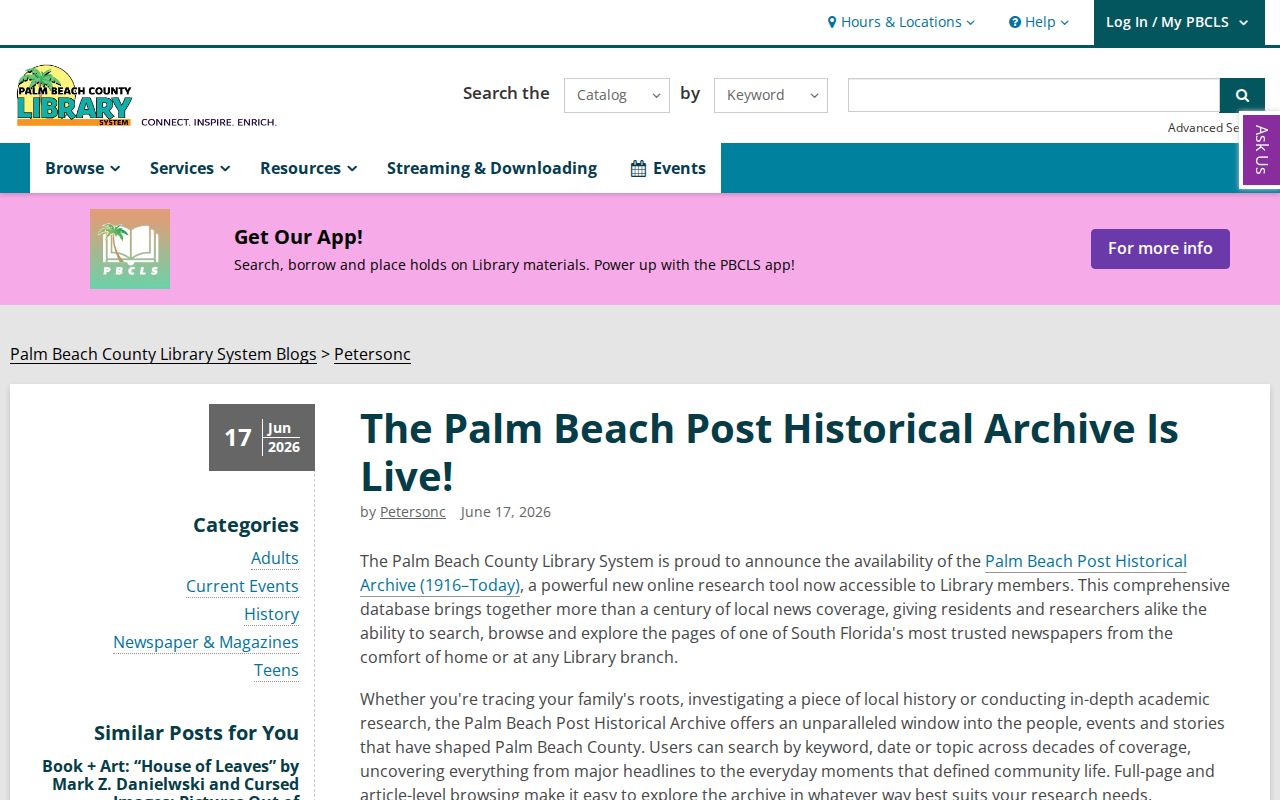
The Palm Beach Post Historical Archive reaches from 1916 to today and became searchable for library cardholders in June 2026. Exact-address searches can find sales, legal notices, clubs, weddings, and obituaries. Try the street without its suffix, surname variants, and subdivision names. Browse the full page when text recognition misreads a house number.
The library's historical archive announcement leads to this recent resource.
When a former owner died, an obituary may supply relatives, a church, cemetery, funeral home, or earlier residence. Search the decedent in eCaseView for a probate petition or order, then verify any heir through an independent public record. An obituary is a lead, while the court file controls the probate role.
Palm Springs Address Continuity Trap
Annexation, not a documented villagewide street renumbering, is the local hazard. Palm Springs grew from its original 700 acres to about 1.6 square miles by 1997, then annexed developed land and reached roughly 4.2 square miles by 2019. The same household can have years of county permit or code history before its parcel begins to generate village records.
Check the Municipality field in PAPA and the Village Boundary Limits map. A 33461 mailing label does not prove village jurisdiction at the date being researched. Use the PCN, legal description, subdivision, and plat to bridge old and new labels. For permits or code cases, ask the village or county custodian that served the parcel during the relevant period.
Note: No official Palm Springs street-renumbering event or local Sanborn sheet was verified, so neither should be inserted into an address history.
First Palm Springs Previous Residents
The village's origin makes first-generation house research unusually concrete. Official history describes empty pasture and a dairy barn at the 1957 charter, followed by about 800 new homes in the first section by August 1958. The earliest useful evidence is therefore likely to include a subdivision plat, developer conveyance, first deed, and building file before a stable directory label appears.
Start the earliest chain with the legal description, not an assumed household directory. Marriage listings at the Clerk reach 1909, while plats and right-of-way maps can reach the late 1800s because county and predecessor land records predate the village. Those dates describe record classes, not proof that a Palm Springs household existed before incorporation.
Request Missing Palm Springs Resident Files
When no portal exposes the needed document, Florida Public Records Law allows a request for an existing nonexempt record. Describe an address or name, date range, and record type. The agency need not answer a research question or create a custom record. It may redact exempt facts and charge duplication costs plus a special-service charge for extensive labor.
For village permits, code files, and police reports, use the Village Request Tracker, phone, or a written request. The tracker warns that submitted concerns become public records, so a phone or letter may suit a person who does not want an email address added to the file. Inside the current village, start with village records. For older or formerly unincorporated periods, route the same address and date range to the county custodian.