
Palm Springs Directory Collections
Palm Springs has no verified stand-alone directory run with published years in the official catalog pages reviewed. That gap matters. The village began as empty pasture, so a claimed nineteenth-century Palm Springs household volume would be false. The dependable route is the Palm Beach County Library genealogy service. Government Research Service can check printed, microfilm, and licensed sources under Palm Beach County, Lake Worth, West Palm Beach, Polk, Cole, telephone directory, and criss-cross headings.
The collections below are verified, but only some are city directories in the strict sense. They form the historical shelf available to a Palm Springs researcher while library staff confirm an exact title, edition, call number, format, and branch. Do not turn a database's broad description into proof that a certain local volume exists.
| Historical source | Verified span | Repository | How to reach it |
|---|---|---|---|
| Printed and criss-cross directories | Exact Palm Springs run not published | PBC Library Government Research Service | Focused staff request; ask about copying |
| Palm Beach Post Historical Archive | 1916 to today | PBC Library | Library-card keyword and page browse |
| Federal census | 1790 through 1950 public | NARA and in-branch Ancestry | Library access rules apply |
| Florida Memory | Varied | State Library and Archives | Free digital search; most holdings remain offline |
| Sanborn maps | Palm Springs sheets not verified | ProQuest at PBC Library; nearby maps at LOC | Subscription in library or free nearby-map search |
| Main Library microfilm | Selected newspaper and journal runs | Main Library Special Collections | Contact Research staff before visiting |
Ask for the first and last issue in each uninterrupted run, plus missing years. That one step keeps a city directory citation tied to a volume that staff actually found.
Palm Springs Directory Years Begin Late
The historical timeline explains the thin local shelf. Palm Springs was chartered in 1957 with 700 acres, a dairy barn, and no human residents. The first section opened in August 1958 with about 800 homes. Before that point, families on the land cannot appear beneath a Palm Springs village heading. Look under the predecessor county geography, a Lake Worth or West Palm Beach label, the subdivision name, or the street name used at the time.
This is more than a naming quirk. Development plats, first deeds, and early building files may identify the initial homebuilding cohort better than a city directory. After 1997, annexations brought developed land into the village. A family could stay at one address while the proper records jurisdiction changed. Present-day postal wording should never be projected backward without checking the parcel and boundary history.
| 1957 | Village chartered on empty pasture |
|---|---|
| August 1958 | First section held about 800 new homes |
| After 1997 | Annexation brought existing developed parcels into Palm Springs |
| June 2026 | Library launched the searchable 1916-to-today newspaper archive |
Palm Springs Directory Help at GRS
A precise request gets better results than asking whether the library has an old phone book. Send Government Research Service a full name and variants, an approximate period, the modern address or parcel control number, and the kind of source sought. Ask which telephone, suburban, city, Polk, Cole, or criss-cross directories cover the present Village of Palm Springs for the target years, including volumes cataloged under nearby geography.
The Main Library Special Collections page describes its selected microfilm and Floridiana material. The captured collection screen below helps identify the right research desk before a visit.

Once staff locate a volume, record its exact title, publisher, edition year, call number, location, and whether a street guide exists. Also ask whether pages may be scanned. Those details make a later citation reproducible.
Read a Palm Springs City Directory
Directory formats vary by publisher and year, so the abbreviation key in the actual volume controls. A normal alphabetical entry may name a household head, show a spouse in parentheses, list a line of work, and give a street address. A widow notation may name the deceased spouse. Telephone books can omit people without listed service and may show only the account holder. Business guides name a manager or owner, not each person at an address.
| Name line | Surname, given name or initial, and sometimes spouse |
|---|---|
| Trade line | Occupation and sometimes a business name |
| Address line | House number, street, and a residence mark such as “h” or “r” |
| Widow notation | Often “wid” followed by the deceased spouse's name |
| Street section | Address followed by the listed occupant or subscriber |
No official open scan of an actual Palm Springs entry was found during research. Treat this inventory as a reading checklist, then confirm each mark against the first page or key in the volume supplied by the library.
- Criss-cross directory
- A later directory arranged by street and number, so an address leads to a listed name.
- Householder index
- An address-focused list of a household head or subscriber, not proof of every person living there.
- Abbreviation key
- The publisher's guide to shortened terms. Save it before decoding entries because symbols can change by edition.
Digital Sources Beside City Directories
The library's licensed resource list includes in-branch Ancestry, with census, immigration, military, wills, and city directory collections. It also lists NewsBank, historical Florida maps, and ProQuest Sanborn Maps. These tools can fill a missing edition, but their presence does not confirm a Palm Springs-specific directory run or Sanborn sheet.
The PBC Library resource catalog shows the databases available to local researchers.
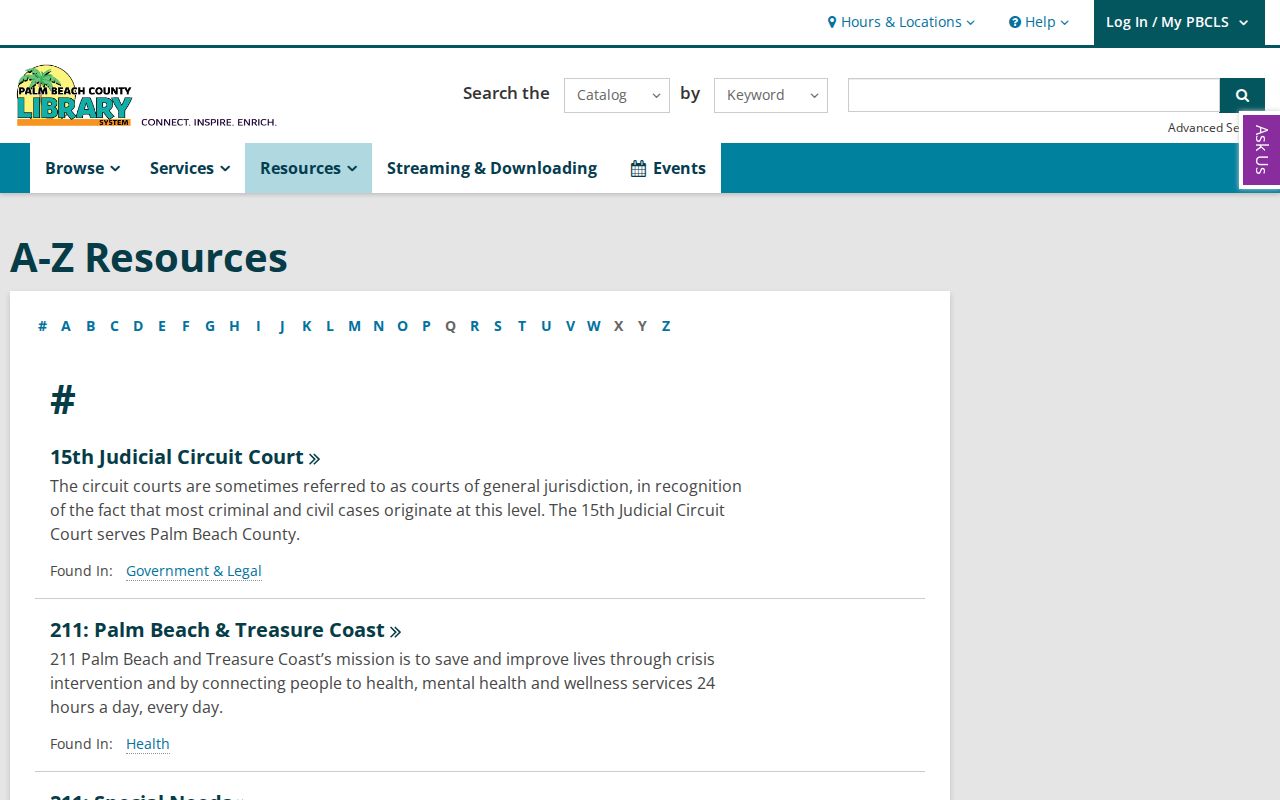
The catalog is a doorway, not the final citation. Note the database name, the collection searched, the search terms, and the image or page number returned.
Trace Palm Springs Family Directory Clues
A city directory works best as a dated snapshot. Repeat the same search in adjacent issues, record spelling and address changes exactly, and test each result against another source. Palm Springs did not exist as an incorporated place in the public 1950 census, so historical enumeration-district maps and present parcel geography matter more than a nonexistent place heading.
- Establish the current address and parcel control number, then identify whether the parcel was within Palm Springs during the target year.
- Ask for the closest verified directory issue under Palm Springs and predecessor place names. Search surname variants and the street section.
- Move one issue forward and backward. Copy spouse, work, address, and notation changes without guessing what an absence means.
- Pair pre-village geography with the public 1950 census. For later decades, use newspapers, deeds, voter material, and confirmed directory issues.
- Test a departure or death against an obituary, probate file, deed, cemetery register, or another dated official source.
A missing name can mean a move, a spelling change, no telephone, an unlisted number, a different catalog geography, or simple omission. It does not prove the person had left Palm Springs.
Palm Springs Directory Gaps in Newsprint
The Palm Beach Post archive supplies a strong bridge after the public census cutoff. Its coverage reaches from 1916 to today and includes obituaries, wedding and club news, legal notices, property reports, and address-linked stories. Search the full address in quotation marks, then try surname plus street without the suffix and the subdivision name. Full-page browse can rescue a result when optical character recognition misreads a name or house number.
The library's archive announcement records its June 2026 launch for cardholders. Record both an event date and its publication date because they are not always the same.
Florida Memory for Palm Springs Records
Florida Memory offers more than 320,000 digitized items from the State Library and Archives, including photographs, maps, manuscripts, and state or local records. Yet less than two percent of the institution's holdings are online. A blank digital result should lead to a catalog or staff inquiry, not a claim that no record survives.
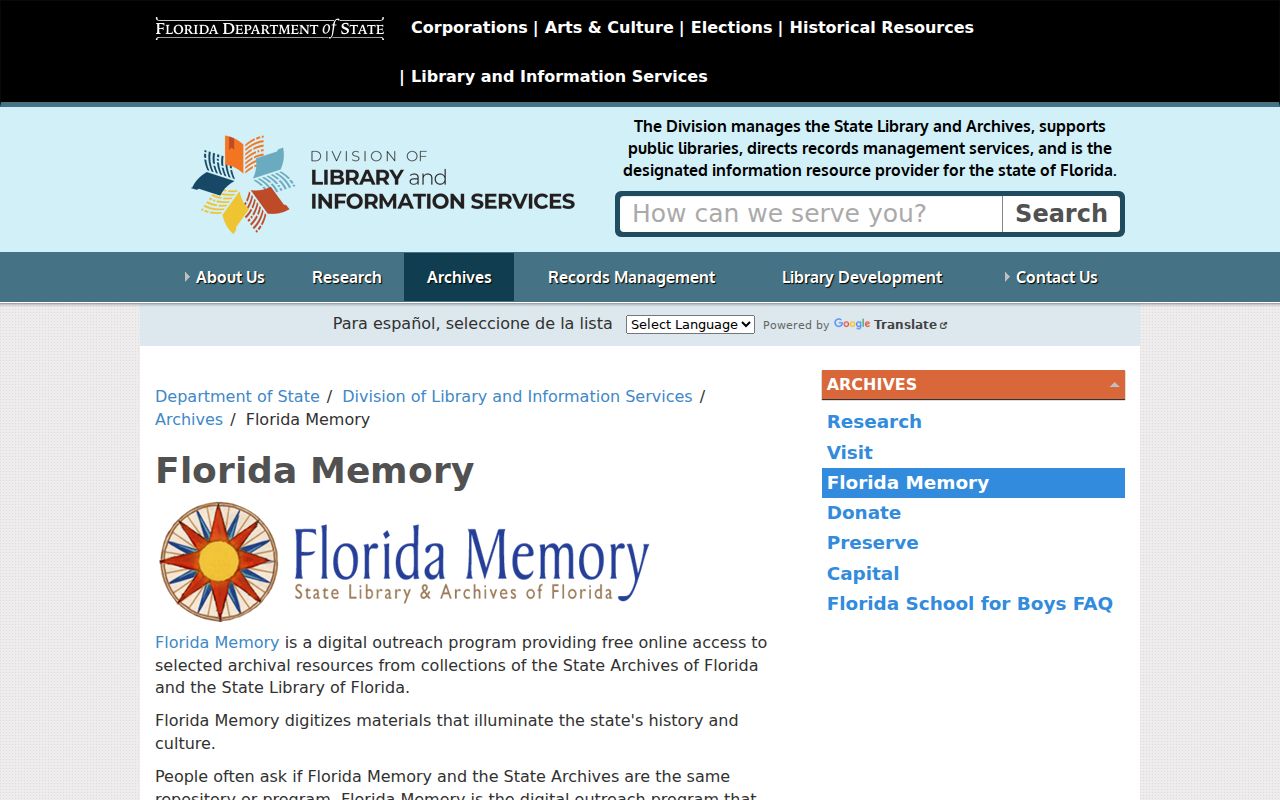
Use names, subdivisions, nearby place labels, and date ranges. The state collection adds context to a city directory find, but the directory entry and archival item should remain separately cited.
Maps Test Palm Springs Directory Addresses
Sanborn fire-insurance maps can show a structure's footprint, use, and older street labels where coverage exists. Palm Springs-specific sheets were not verified. The Library of Congress has nearby West Palm Beach maps from 1919 and 1920, useful only as regional context because they predate the village. ProQuest's community and year list must be checked inside the library subscription before citing local coverage.
Map the address to a parcel before trusting an old place heading. Palm Springs sits among Lake Worth Road, Congress Avenue, Military Trail, Kirk Road, Forest Hill Boulevard, and 10th Avenue North, but later annexation produced an irregular municipal edge. A postal label can stay the same while the government responsible for permits and code records changes. The parcel control number, subdivision, plat, and legal description provide a steadier bridge between a directory entry and present geography. They also help library staff search material filed under Palm Beach County rather than the village name.
Yearbooks, church files, Garden Club material, VFW Post 4360 records, and school news may add personal context. Membership is not presumed public. Start with a dated directory or obituary clue, then ask the responsible organization whether an archive exists and what access rules apply.
For a modern address-first trail, the Palm Springs street directory handles current parcel and deed tools without turning this historical collection page into a property-search manual.